Benro Bat Zero
A good tripod is the foundation for great images. It gives you the flexibility to photograph a subject exactly as you choose, and the freedom to create images that simply wouldn’t be possible otherwise.
What I need from a tripod.
Tripods can look incredibly simple until you start asking them to do something demanding. For the way I photograph, particularly small macro subjects, I need far more than three legs and a stable platform.
My subjects might be on the forest floor, halfway up a damp, moss-covered bank, or tucked amongst dense vegetation where getting the camera into the right position is a real challenge.
I need stability, independent leg positioning and the ability to get extremely low to the ground. The tripod also has to comfortably support my Canon EOS R5 Mark II with either the EF 100–400mm Mark II or the EF 180mm Macro and a 1.4× teleconverter, both used on an EF–RF adapter.
I also need somewhere to attach lighting, reflectors and other support equipment. Once I’ve gone to the effort of positioning the tripod, I want the freedom to control the light as well, rather than having the image dictated by harsh sunlight, deep shadows or awkward surroundings.


My setup.
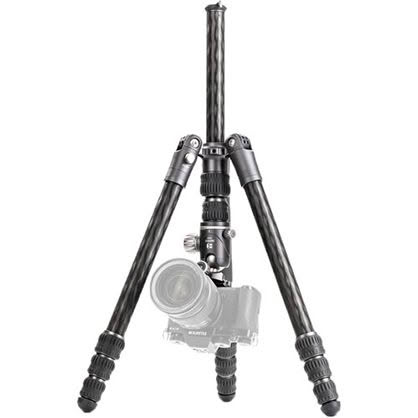
The Benro Bat Zero Carbon Fibre Travel Tripod is the smallest full-size tripod I’ve used for this sort of work, yet it has turned out to be one of the most adaptable. That adaptability ultimately gives me more freedom to create.
The kit comes with Benro’s VX20 ball head, but I made a swap. I moved my Benro GD36PT geared head from my Benro Mach3 onto the Bat Zero, and put the VX20 on the Mach3. That gives me a lighter Mach3 setup for travel, when I don’t need the precision of a geared head.
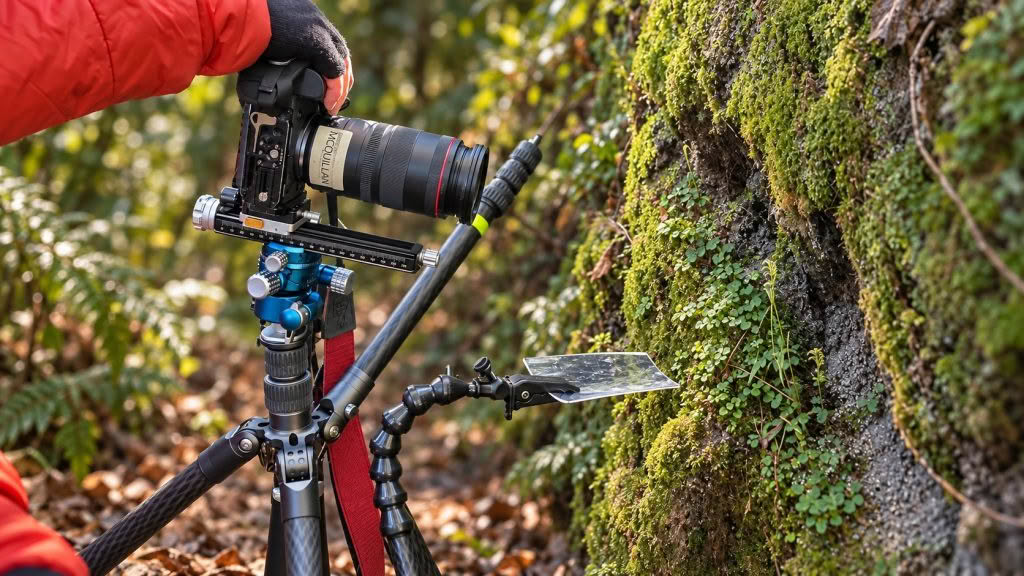

Small enough to carry. Tall enough to matter.
As mentioned above, I already own the Benro Mach3, which is a larger, very solid and relatively lightweight tripod. To be clear, the Bat Zero doesn’t replace it.
But nature is rarely flat and even. With small macro subjects, I often find myself in places where simply getting a tripod into position is the hardest part of the shot. Forests, coastlines and wetlands look spectacular from a viewpoint, but they’re much harder to move through once you’re inside them. Tree roots, steep banks, wet moss and subjects growing at awkward angles can make a big tripod the wrong choice, however stable it is on paper.
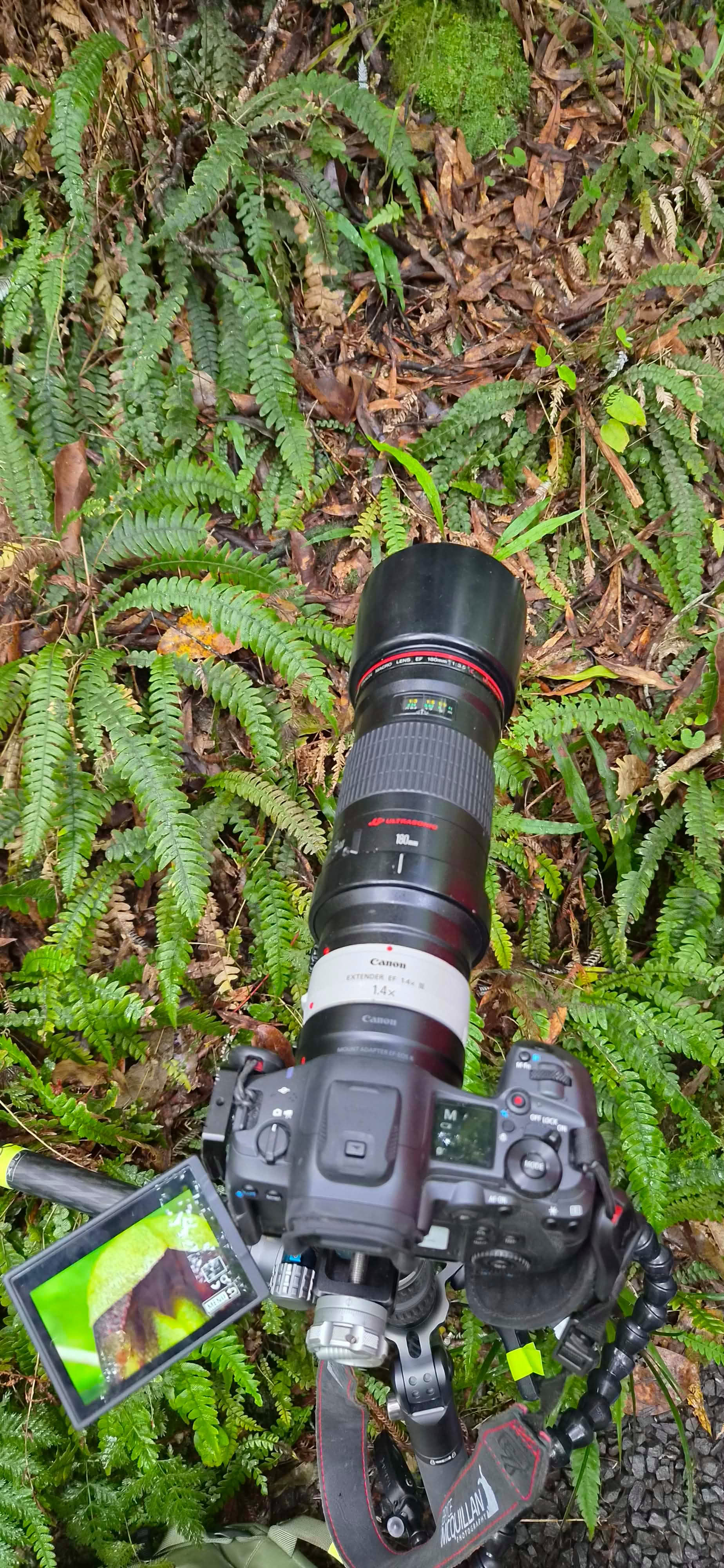
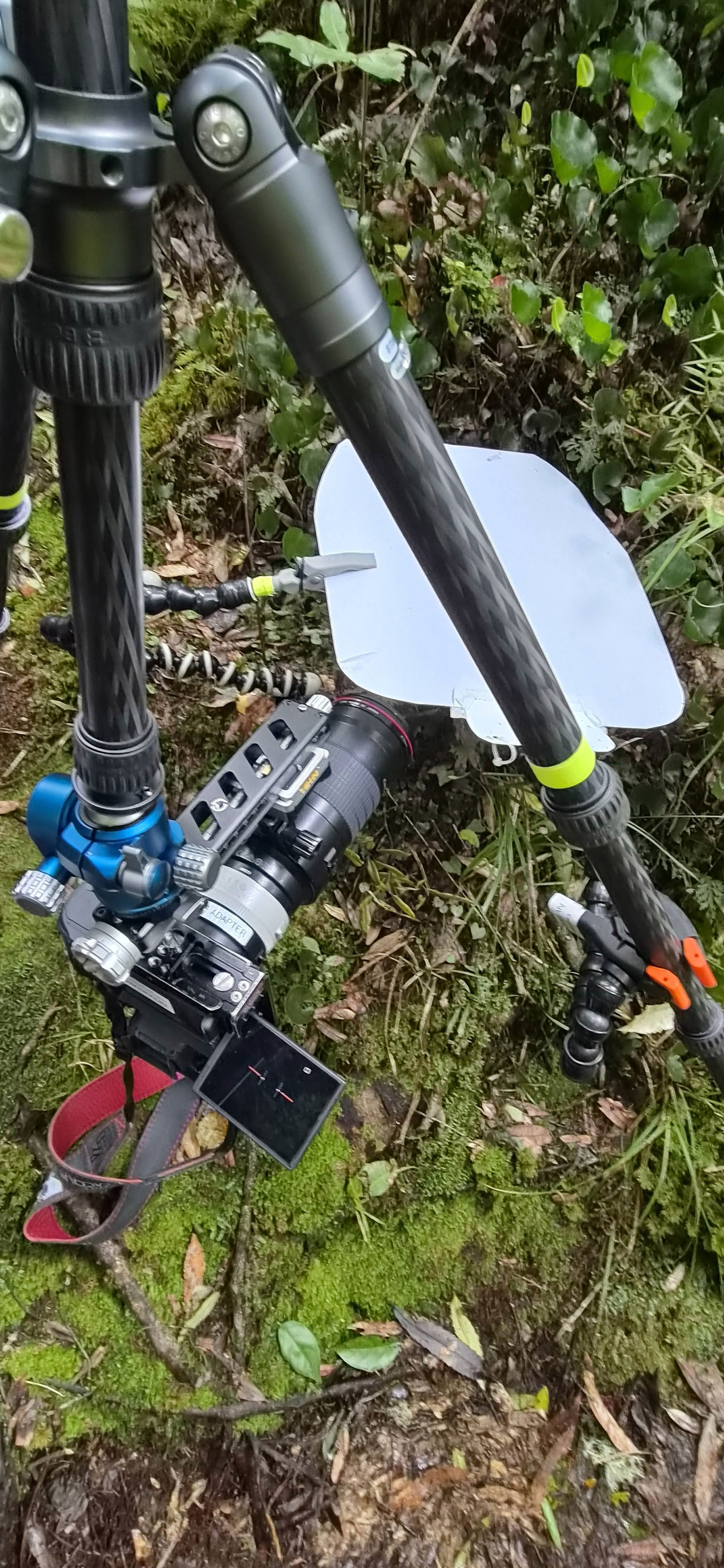
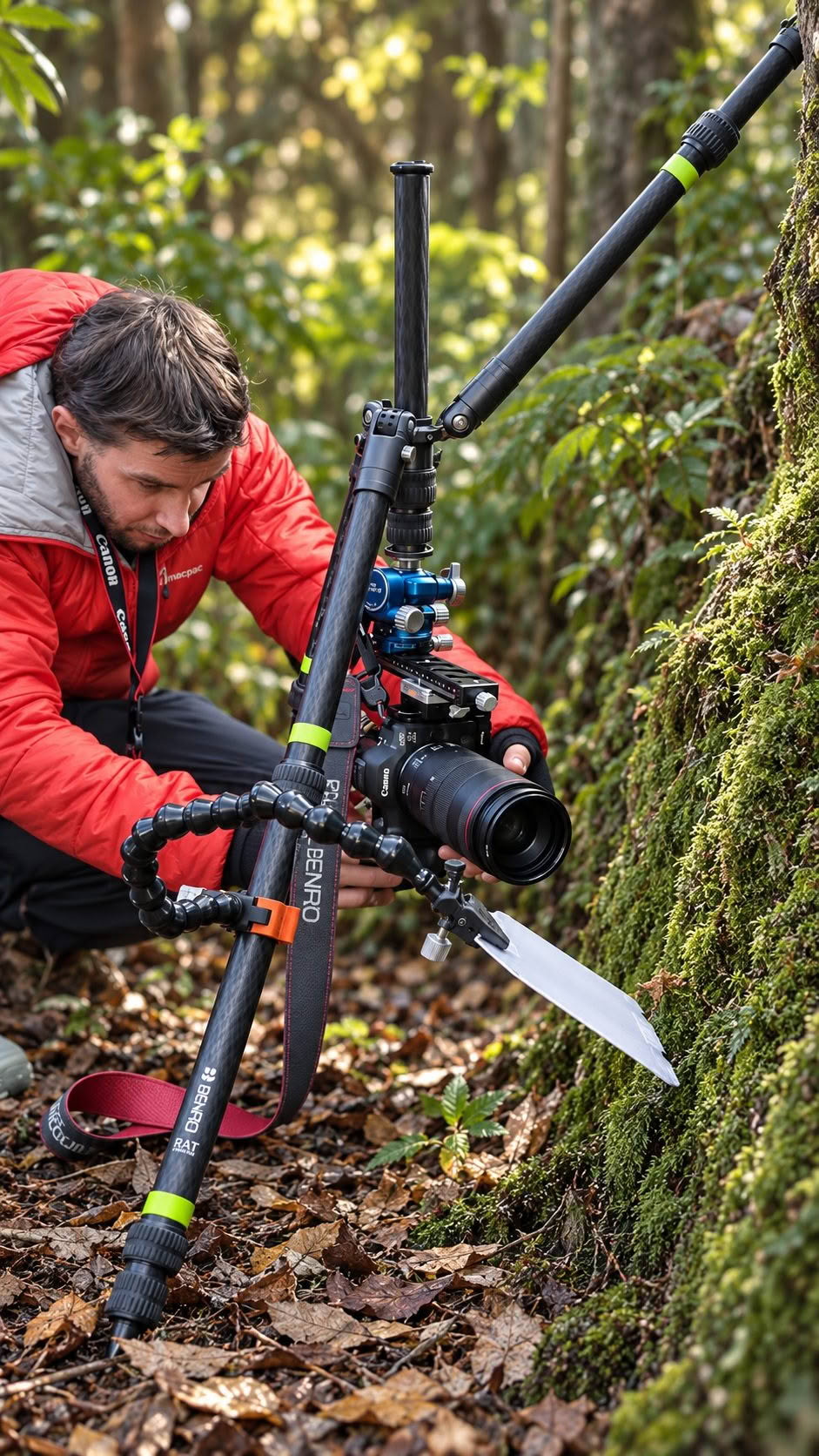
Opting for a smaller tripod, like the excellent Leofoto LS-223C, helps, but you soon run into a similar issue: getting the right angle and height. The Leofoto sits impressively low, yet the camera still sits on top of the tripod. The Bat Zero goes further. Flip its legs over 180° and the camera hangs beneath the tripod, so it can rest right on the forest floor, or even lower if you’re on a slope. Not even a bean bag can put the camera below the surface you’re working on.

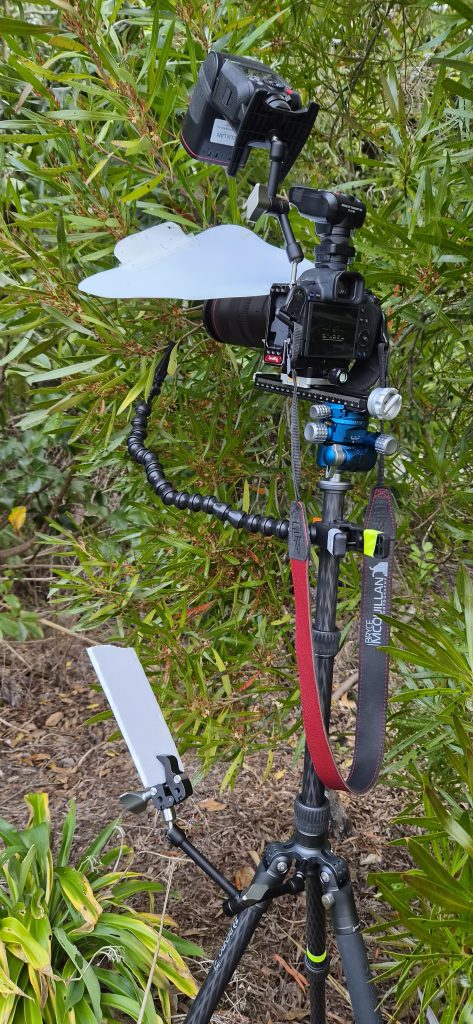


Getting low is only half the story, though. With the centre column raised, the Bat Zero reaches 140.5 cm, so unlike a tabletop tripod, it isn’t limited to ground-level work. For macro, that extra height is surprisingly useful when photographing orchids and flowers growing higher up on trees or mossy banks.
Benro rates it to carry up to 10 kg, and my heaviest combination, the R5 Mark II with the EF 100–400mm Mark II and a 1.4× teleconverter, comes in well under that. A payload rating isn’t the same as rigidity at full height, but it’s reassuring to know the tripod isn’t working near its limit.
Magnification brings its own challenge. With the EF 180mm Macro and a 1.4× teleconverter, I can go beyond life size (up to 1.4×), where even tiny vibrations show up in the image. A wireless shutter release helps a lot. If you don’t have one, set the camera’s self-timer so any shake from pressing the shutter has time to settle before the exposure starts.
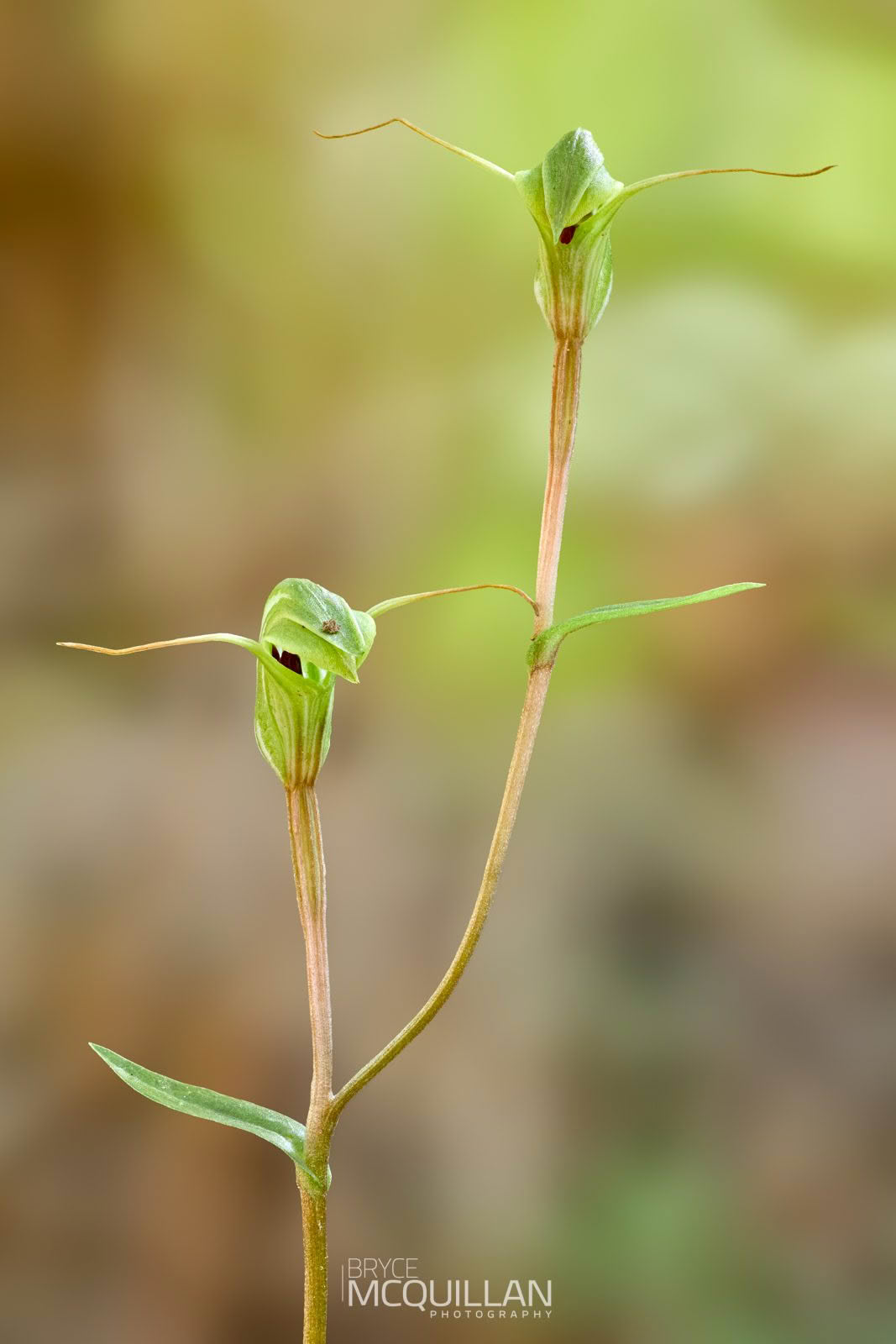
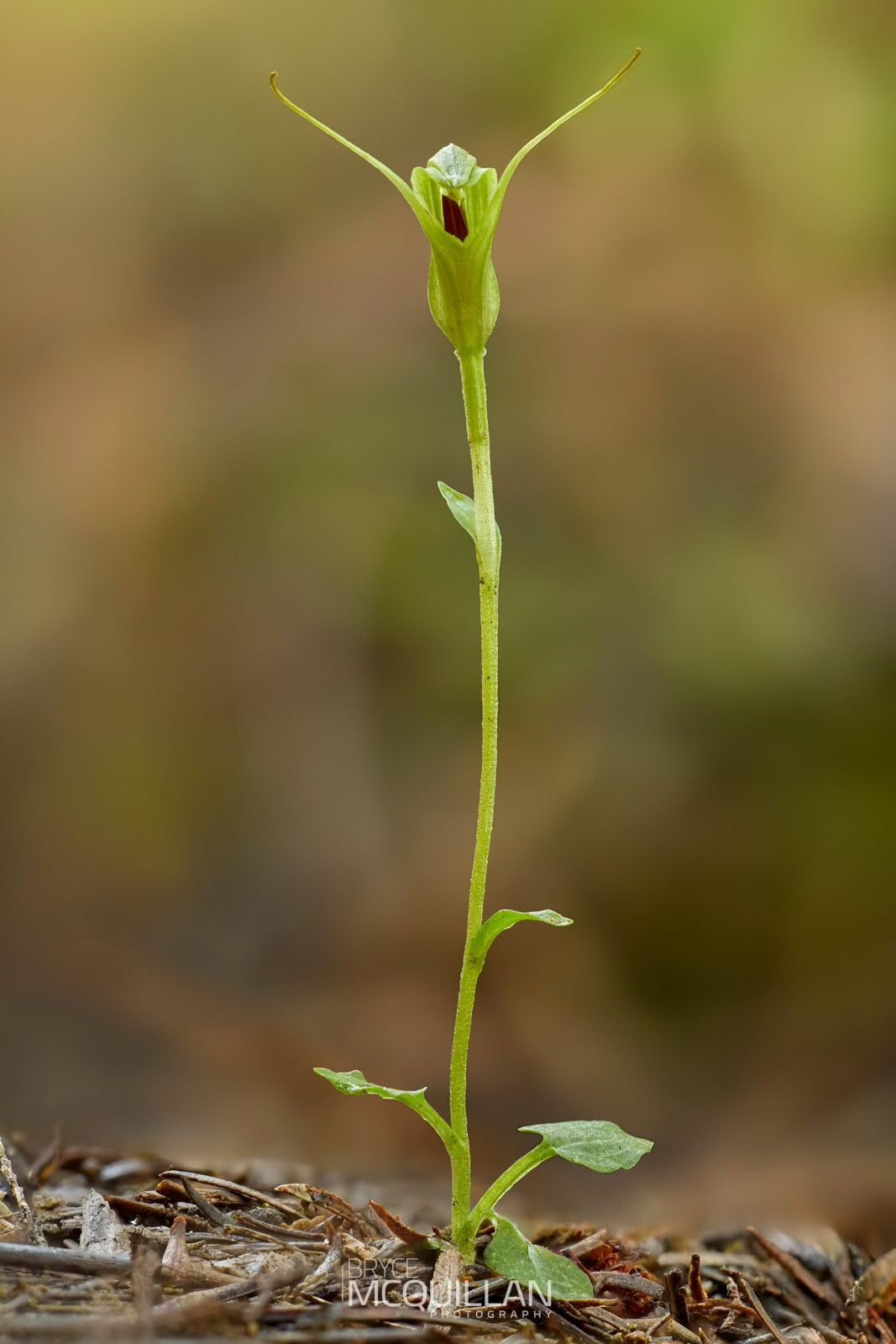
The images below show that setup in the field: the Bat Zero with its legs flipped 180°, supporting the Canon R5 Mark II and EF 180mm Macro with a 1.4× teleconverter. Alongside it is the final focus-stacked image. Even with the teleconverter, the results are impressively sharp.

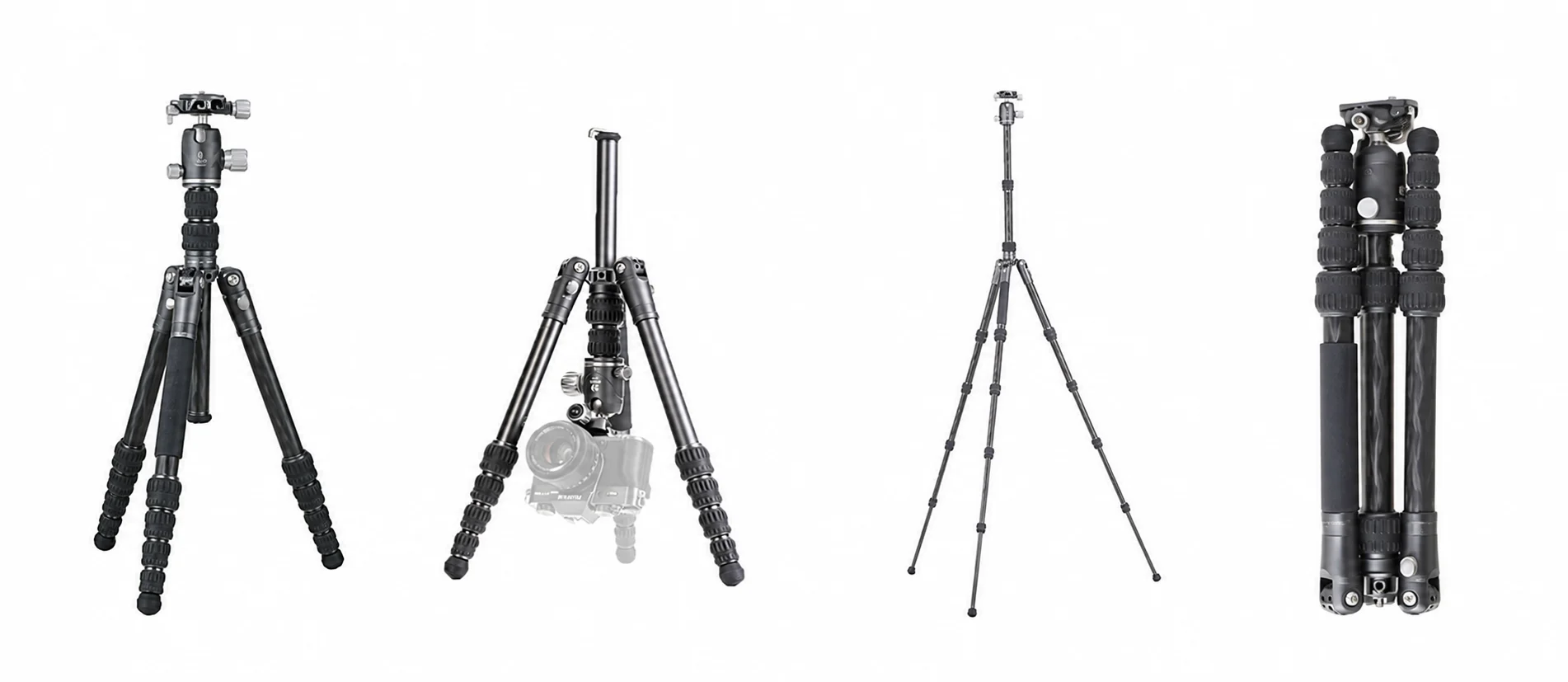
Five leg angles change what a tripod can do.
Each leg can be set independently to one of five preset angles. On a product page, that looks like a minor specification. In the field, it’s the difference between fighting the ground and building the tripod around it.
One leg can sit almost vertical against a bank, another can reach across a tree root, and the third can spread wide to anchor the whole setup. Instead of hunting for a patch of flat ground and compromising the composition, I can put the camera where the subject needs it and let the legs adapt to the terrain.
With the ability to flip the legs 180°, it means there are very few positions I can’t reach. For macro work, that adaptability is often worth more than a heavier, more rigid tripod.
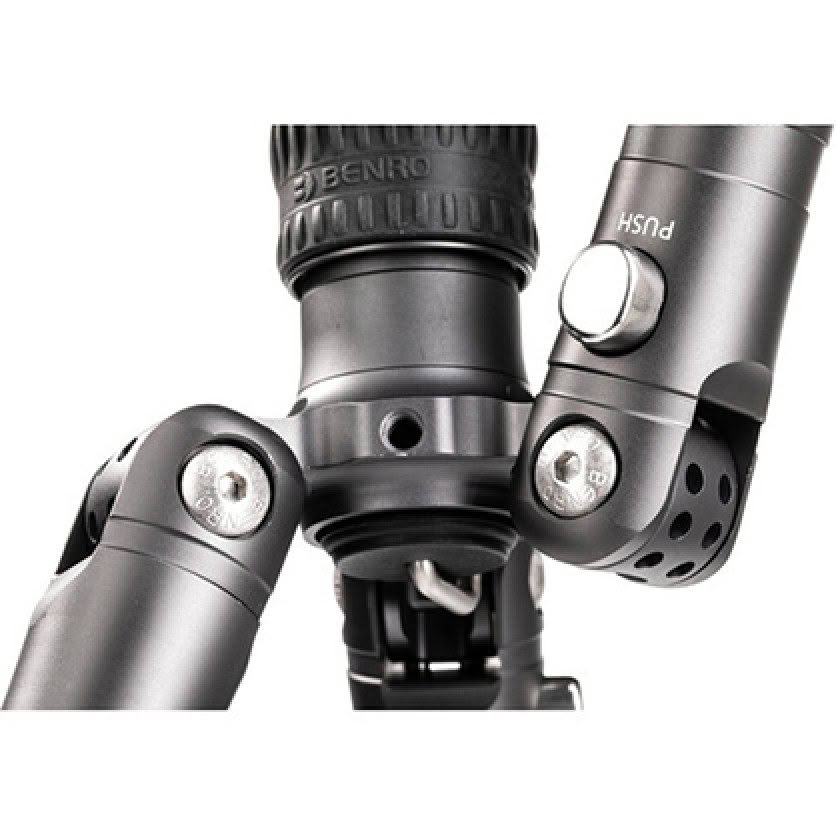
The three accessory mounts – turning the tripod into a complete mobile studio.
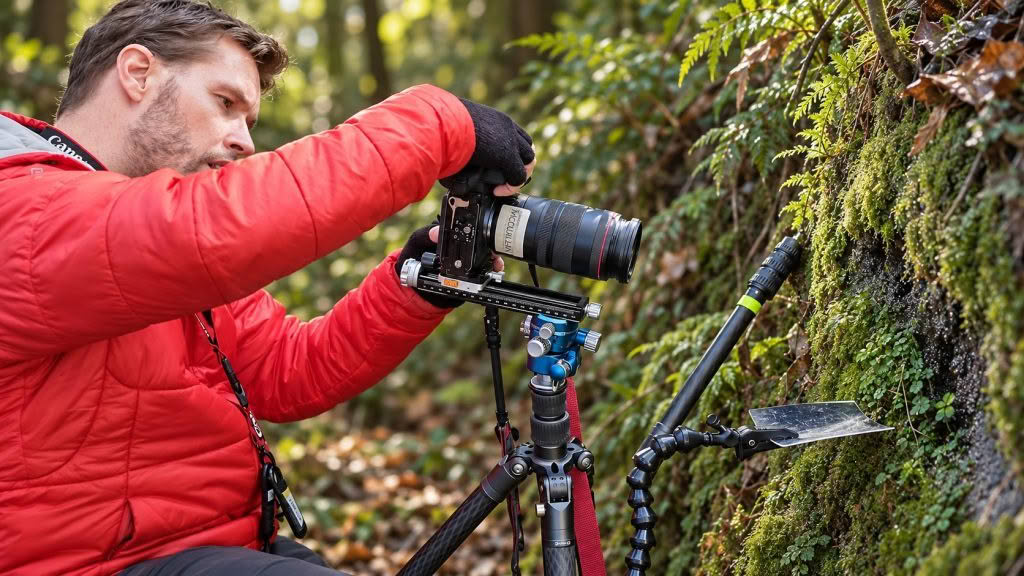
The Bat Zero has three 1/4-inch accessory mounting points around its aluminium spider. I’ve come to really value features like this, because they let me attach arms such as the Leofoto AM-4 Magic Arm directly to the tripod. Rated to hold up to 3 kg, the AM-4 comfortably supports my largest speedlite, the Canon EL-1, as well as LED lights, reflectors and diffusers.
A second arm, or a Wimberley Plamp clamped to a leg, can hold back a leaf, support a stem, move a distraction out of the frame, or place a white bounce card exactly where I need it.
Everything stays connected to one platform. I’m not balancing separate light stands or pushing clamps into wet soil around a tiny orchid. If I need to reposition, the lights and supports move with the tripod, so I’m not rebuilding the setup from scratch.


The tripod gives me the position. The geared head gives me the precision.
As I mentioned earlier, I don’t use the Bat Zero in its standard kit configuration. The VX20 ball head now lives on my Mach3, which can also reverse its centre column for low work. With the smaller head, the Mach3 is a lighter kit, but for macro, or any photography where precise composition matters, I often find ball heads a little frustrating, because even when it is locked off, a ballhead can still shift slightly under the weight of the camera and lens.
So whenever I need precision and flexibility, which is almost every time I head out with a macro lens, the Bat Zero comes with me. The only time I’ll take the Mach3 instead is when I have a long walk ahead, need to strap the tripod to a backpack and want to save as much weight as possible. On those trips I’m usually photographing larger scenes, where precise composition matters a little less.
For macro, precision matters for another reason too. I prefer not to crop. Keeping as many pixels as possible gives me a large, detailed file to examine on the computer at home, which often helps me identify the species I’ve photographed.
These days, I’m driven more by species than by “wow” shots. I still want the best possible photograph of each one, but some species are rare, threatened or simply hard to reach. In those moments, you can’t always afford to be particular, or “fussy,” as a good friend puts it. You just need to capture the best image you can in that situation, at that time.
There’s little point having an excellent camera, lens and flash if you can’t get the composition right, or have to compromise on shutter speed, ISO or aperture just to get a usable shot. A well-positioned tripod removes those compromises and lets you make the best possible image in that moment.
My main setup is the Bat Zero legs with the Benro GD36PT geared head, often with a NiSi NM-200S macro focusing rail on top. That can change depending on the subject and location, though.
In some situations, such as sandy or muddy conditions, I swap the GD36PT for my older Benro GD3WH 3-Way Geared Head. Its simpler design has fewer nooks and crannies for dirt and sand to get into, so it’s easier to clean. As I mentioned in my GD36PT review, both are excellent geared heads; they just work differently. The GD3WH is geared on all three axes, while the GD36PT combines the speed of a ball head with the precision of geared control, giving me the best of both worlds.
The tripod gets the camera into the right area quickly. The GD36PT then lets me make fine geared corrections to pitch and side-to-side tilt without disturbing the whole setup, while the rail moves the camera forward or backward without touching the legs. At macro distances, those small controls make a big difference.

Benro GD36PT Geared Drive Three-Way Head
The GD36PT combines quick positioning through its ball section with geared micro-adjustment on pitch and tilt. The tripod handles the awkward terrain. The head handles the final framing.


Just remember, the best tripod gets your camera in position, so you can capture what you have envisioned.


The Bat Zero is one of the most practical tripods I have used for field macro photography.
It is not the tripod I would choose purely for maximum height or maximum rigidity. That is not really the point. Its strength is how much control it gives me for its size: five independent leg positions, a compact reverse-folding design, three accessory mounts, and enough height to move straight from a ground-level orchid to a landscape.
Combined with the GD36PT and the Nisi focusing rail, it has become a portable studio setup. I can support the camera, position my lighting and hold reflectors or plant branches from the same tripod. For the type of photography I do, that flexibility allows for photographic opportunities that were simply not possible before.
Equipment mentioned
Benro Bat Zero Carbon Fibre Travel Tripod with VX20 Ball Head · Benro GD36PT Geared Drive Three-Way Head · My Benro GD36PT field review · NiSi NM-200S Macro Focusing Rail · Wimberley Plamp II · Canon EOS R5 Mark II.